

NATURE CATEGORY

PROUDLY SPONSORED BY

CATEGORY DESCRIPTION
The Nature Category celebrates photography that showcases the beauty and complexity of the natural world with precision and technical excellence. This category is dedicated to images that depict wildlife, plants, and natural environments as they exist in the real world, highlighting the photographer’s skill in preserving the integrity of the scene
CATEGORY INTENT
The intent of this category is to highlight images that accurately represent the original scene, without manipulation or alterations that compromise the natural essence of the subject. The focus is on in- camera capture, with attention to detail, composition, and technique to present nature in its most unaltered and striking form
CATEGORY RULES
This is a MINIMAL EDITING CATEGORY and entries must:
- Represent the original capture truthfully
- Not add, hide or remove elements from the original capture (unless explicitly allowed)
- Avoid compositing or heavy manipulation
Only minor adjustments are permitted to enhance the original capture.
RULES:
1. Compliance with Global Rules, Terms and Conditions, and Spirit and Intent of the Awards
All entries must comply with the Global Rules, Terms and Conditions, and the Spirit and Intent of the awards. This includes adherence to the principles of originality, accuracy, and ethical standards set forth by the competition. Images should represent the work of the entrant, and any entries that violate these guidelines will be disqualified.
2. Representation of Nature
Entries must feature natural subjects (such as plants, wildlife, or natural phenomena) as they were originally captured.
Landscapes without a dominant nature subject should be entered into the appropriate Landscape category.
Domestic animals, captive wildlife (those reliant on human care or feeding), or wildlife photographed while using baiting techniques are not permitted and may be better suited to the Animal Category.
Physical backdrops, digital backdrops or artificial elements are not allowed to be added to the natural scene.
3. Human Presence
- An image may include signs of human existence (such as a fence, building, or other man-made objects) if they are relevant to the subject’s environment (e.g., a hawk on a fence post).
- The human figure or any part of a human body (such as a hand or foot) must not appear in the image.
4. Ethical Considerations
Entrants must not disturb the habitat, handle living wildlife, bait or engage in actions that could harm or distress any creature.
Entrants must adhere to Department of Conservation guidelines or the guidelines of the country in which the image was taken and follow any local or national wildlife protection laws.
5. Allowed Adjustments
- Exposure, contrast, and colour correction (including black & white conversion)
- Cropping, straightening, rotation, and perspective correction
- Sharpening and noise reduction
- Removal of dust spots and minor distractions (e.g. a leaf, small branch, or small object in the background).
- Light dodge and burn
- Perspective correction is permitted where it enhances an accurate and natural representation of the original scene. However excessive adjustments that distort or artificially exaggerates the perspective are not allowed
6. Capture Techniques
- In-camera techniques such as multiple exposure and intentional camera movement (ICM) are allowed
- Focus stacking and stitching are permitted for technical purposes only (depth of field or panorama), using images from the same scene and time, without adding new elements
7. Not Allowed
- Compositing or combining unrelated elements
- Removal of many minor or transient elements that cumulatively result in a significant change to the original scene
- Excessive retouching or manipulation that changes the original capture
- Any edit that misrepresents what was originally captured (e.g. changing a colour from it’s original hue, heavy dodging and burning that hides an element)
- Any in-camera filters that change the original capture in a way that would not be allowed in post-production for a minimal editing category
- Any use of AI-generated content (as outlined in Global Rules 2.2)
- Any entry that misrepresents AI-generated elements as photographic work
- Adding non-photographic elements (except in explicitly permitted circumstances outlined in the category specific rules)
8. Presentation (Digital & Print)
- Series must have a clear white gap between images or will be treated as a composite
- Non-rectangular crops must be presented on a white background (digital entries) – unless representing a print mat (see below)
- Computer-generated borders that simulate a physical print presentation (e.g. mat colour or mount) are only permitted for entries submitted for print judging and may be included in the required digital upload of those print entries. Such borders must be clearly distinct from the image.
- A thin stroke line (black or white) may be used to define the edge of the image only if the edge would otherwise not be visible
WANT TO BE NAMED PROFESSIONAL NATURE PHOTOGRAPHER OF THE YEAR?
You need a minimum of 3 entries within the Nature Category to be in contention to be a Nature Category Finalist. The top 3 images from the top 3 highest scoring entrants in the category for New Zealand, and Australia, will be the Nature Category finalists. A minimum number of eligible Australian finalist are required in order to name an Australian Professional Nature Photographer of the Year.
You need a minimum of 6 entries across any category to be in contention to be a finalist for Photographer of the Year. The top 6 images from the top 3 highest scoring entrants overall for New Zealand, and Australia, will be the Photographer of the Year finalists. A minimum number of eligible Australian finalist are required in order to name a Australian Photographer of the Year.






JOIN US IN CHRISTCHURCH THIS AUGUST!
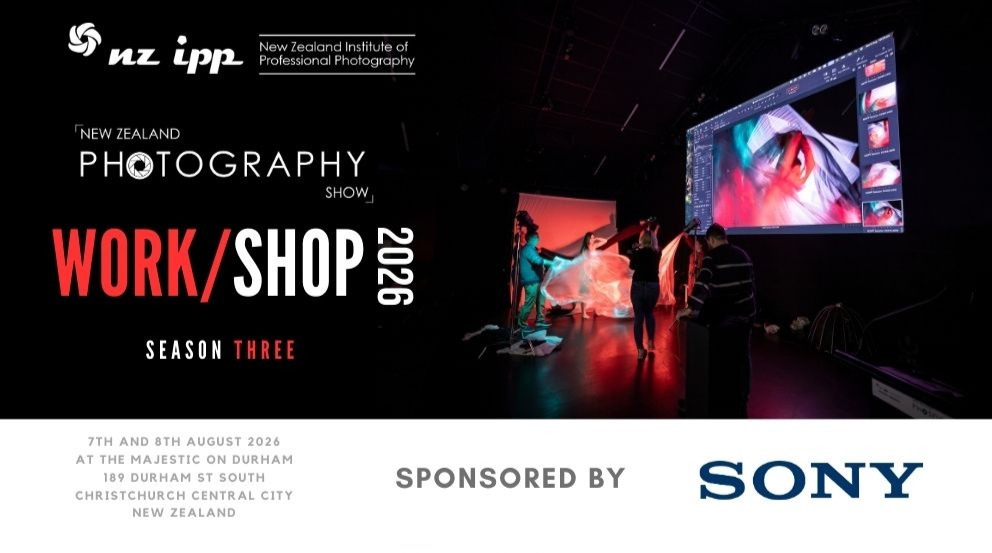
Come and watch the live judging of the 2026 Iris Awards in-person or the live feedback round of the New Zealand Amateur Photography Awards, and stick around for the New Zealand Photography Show - Work/Shop 2026 - a two-day event offering inspiration, education, networking, and so much more! Purchasing a ticket will also get you in the draw to win an EPIC prize! Check out all the details here: https://nzphotoshow.co.nz/
Get yourself onto a masterclass on Sunday to fully immerse yourself in a specialised area of interest, and finish off the week at the 2026 NZIPP Gala Awards Evening sponsored by CRK and Ilford, to celebrate the success from the Iris Awards and the New Zealand Amateur Awards. https://nzphotoshow.co.nz/product/gala-awards-evening/
IRIS AWARDS 2026 KEY DATES
ONLINE ENTRIES OPEN: 9am Monday 25th May 2026 (NZST)
ONLINE ENTRIES CLOSE: 11.59pm Sunday 21st June 2026 (NZST)
PHYSICAL PRINT DELIVERY: From 9am Monday 13th July 2026 to 5pm Friday 31st July 2026. We cannot accept print boxes before 13 July.
LIVE JUDGING: From approx. 8am daily: Tuesday 4th August, Wednesday 5th August, Thursday 6th August 2026.
Venue: Majestic on Durham, 189 Durham St South, Christchurch.
CATEGORY FINALISTS ANNOUNCED: Approx. 8pm Thursday 6th August Live at the Iris Awards Wrap Party. Venue: TBC
GALA AWARDS EVENING - WINNERS ANNOUNCEMENT: from 5:15pm Sunday 9th August 2026. VENUE: Majestic on Durham - 189 Durham Street South, Christchurch; THEME: Golden Hour You can purchase tickets here NOW!
PRINT CASE COLLECTION AND POSTAGE: When you enter the Iris Awards, you will need to indicate your preference to collect your print case from the venue on Saturday 8th August 2026 or have it couriered to your address. **PLEASE CHECK YOUR ADDRESS ON AWARD FORCE AT THE TIME OF ENTRY FOR PRINT CASE RETURNS**